Six thousand years of continuous habitation on one mound - and the bazaar below that is still gloriously, stubbornly alive.
Eight Thousand Years on One Mound
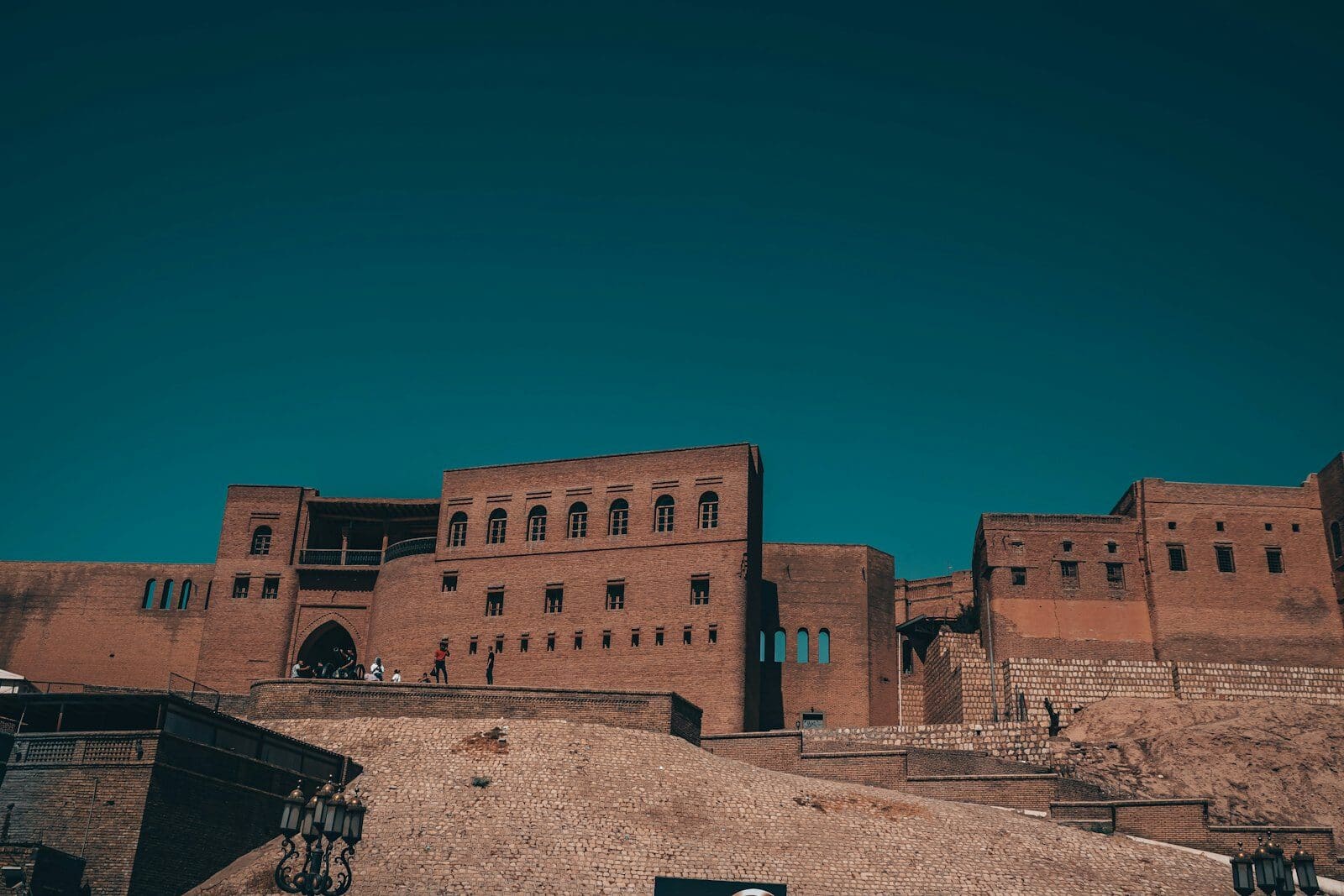
Erbil Citadel does not sit on a hill. The hill is the citadel. Generations built, collapsed, and rebuilt on the same mound for at least six thousand years - some say eight - until the whole mound became a layered city, ringed by walls, crowned with a maze of alleys and courtyard houses.
From the top, the view is the story of Iraq in one glance: the bazaar spreading below, the mountains of Kurdistan blue on the horizon, and the minaret of the Mudhafaria rising beside the mound like a cousin of Samarra's spiral.
The Kurdish Sun
The citadel is the heart of Erbil, and Erbil is the heart of Iraqi Kurdistan. Above its gates, the Kurdish sun - a radiant disk of twenty-one rays - remembers the ancient sun worship of the Medes. The old city is a place where that memory is still worn, still spoken, still poured into glasses of tea.
Wandering the Qaysari Bazaar
Descend from the citadel and you step into the Qaysari Bazaar, where textile dyers hang bolts of cloth over the walkways like flags. The smell of cardamom and leather mixes with the sound of bargaining in three languages. It is one of the oldest market streets in the world, and it remains gloriously, stubbornly alive.
"A city that has been inhabited continuously for six thousand years has learned something about hospitality." - Ali Jasim, on Erbil
When You Visit
Erbil is the natural gateway to the north - it opens the Iraqi Kurdistan Trek - and the citadel rewards both a quick sunset visit and a full morning of wandering. Take both if you can.