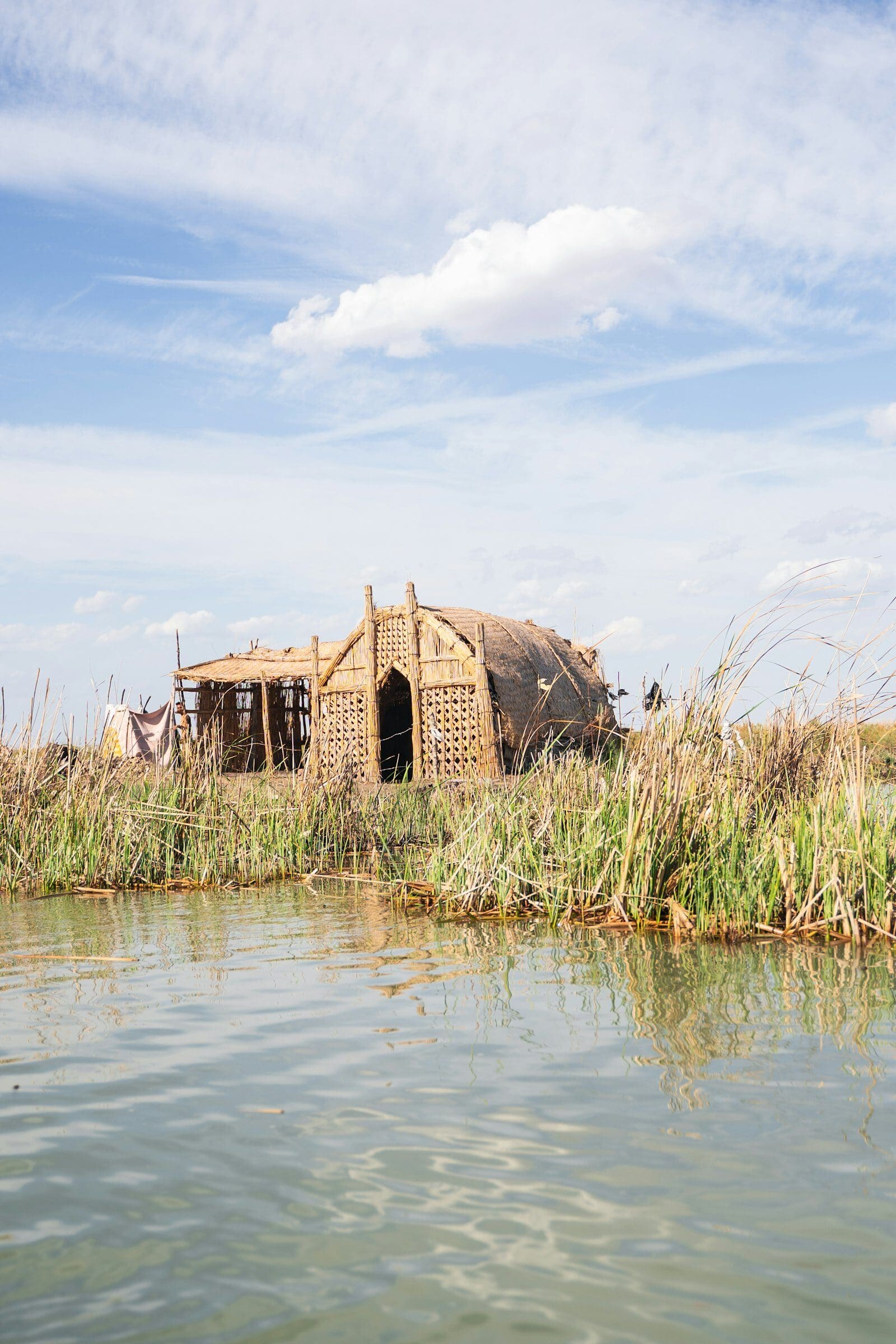
Gliding through the reed channels of Chibayish as the first light of morning turns the water to gold - a glimpse of the Iraq that guidebooks cannot prepare you for.
Before Dawn on the Water
The mashoof glides without a sound. Ahead of us, the reeds of the Mesopotamian Marshes rise higher than a man on horseback, and the first light of morning turns the channels to hammered gold. This is the Iraq that guidebooks cannot prepare you for.
The Marsh Arabs - the Ma'dan - have built their mudhif reed houses here for five thousand years, exactly as their ancestors did. To sit inside one, under its vaulted arch of bundled qasab reeds, with tea being poured over cardamom, is to understand that civilization did not merely begin here. It still lives here.
The Rhythm of Marsh Life
A day in the marshes unfolds slowly, and that is the point. Water buffalo wade past the house at dawn. Fishermen repair their nets on the platforms. Children row to school in canoes. By late afternoon the light turns amber, and the water becomes a mirror of the sky.
"We did not come to the marshes to see a place. We came to see how people live in a place that time forgot to ruin." - a traveler, Chibayish
When to Go
October to April is the sweet season - mild days, cool nights, and the water high enough to reach the deepest channels. The expeditions from our Mesopotamian Marshes itinerary time the paddles for dawn and dusk, when the birds are loudest and the light is softest.
The Ziggurat, an Hour Away
Forty minutes from the marsh village lies the great Ziggurat of Ur - the stairway to heaven built by Ur-Nammu around 2100 BCE, and the traditional birthplace of Abraham. It rises out of the desert like a mountain made by hand. Stand at its base at sunset, and the seven thousand years between you and the Sumerians collapse to nothing.